

Rocky yards get a bad reputation. Uneven ground, shallow soil, stones scattered across the surface. It can feel like a difficult hand to work with. But rocky terrain has something going for it that most people overlook: character. The key to landscaping a rocky yard isn’t to fight what’s there. It’s to design around it.
Here are five tips that actually work. For more ideas, browse the Home and Garden category.
What Works for Landscaping a Rocky Yard
1. Stop Trying to Remove Every Rock
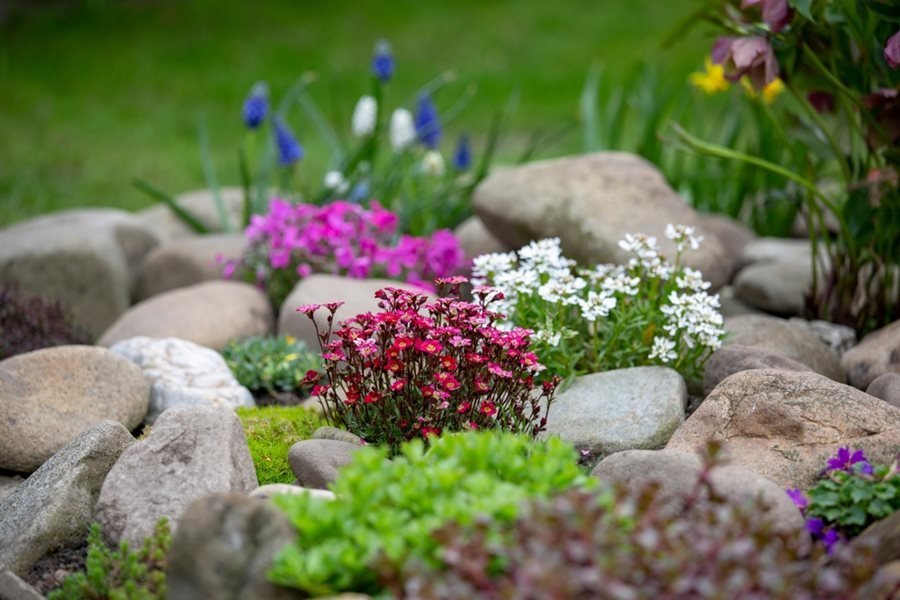
The first instinct is usually to clear everything out. Resist it. Rocks can be a feature, not a problem. Large boulders make strong focal points and natural-looking borders. Smaller stones work well for pathways and ground cover. A simple rock garden mixing pea gravel, river rock, crushed stone, and a few statement boulders adds texture and structure without a lot of ongoing maintenance.
2. Choose Plants That Belong in Rocky Soil
Trying to grow a traditional lawn in rocky, shallow soil is a losing battle. The better move is to select plants that actually thrive in these conditions. Drought-tolerant ground covers and native species are a natural fit since they need less water and care. Succulents handle poor soil and store moisture well. Ornamental grasses add movement. Hardy herbs like lavender hold up in dry conditions. Other reliable choices include sedum, creeping thyme, black-eyed Susans, catmint, coneflower, juniper, and smoke bush.
3. Use Drip Irrigation Instead of Sprinklers
Water runs off rocky, uneven ground fast. Traditional sprinkler systems waste a lot of it. Drip irrigation delivers water slowly and directly to plant roots, letting moisture reach where it’s actually needed. It cuts down on water waste, limits weed growth, and the lines stay hidden under mulch or stones so the setup stays clean.
4. Improve Soil Only Where You’re Planting
Rocky soil tends to be low on nutrients, but you don’t need to overhaul the whole yard. Focus on the spots where plants will go. Work in compost, aged mulch, or other organic matter to improve drainage and nutrient content in those targeted areas. Over time, plant roots do a lot of the work on their own, gradually improving the surrounding soil as they establish.
5. Build Raised Beds or Terraces on Problem Spots
If the ground is too uneven or rocky to work with at all, raised beds and terraces are a practical solution. They let you control soil depth and composition for whatever you’re planting. On slopes, terracing also helps with erosion and drainage. Aim for at least six inches of depth in raised beds to give roots enough room to establish.
Conclusion
Landscaping a rocky yard takes a different mindset than a standard lawn project. Once you stop trying to eliminate the terrain and start working with it, the options open up. The right plants, smart watering, and a few structural elements like raised beds or stone features can turn a yard that felt like a problem into one that looks like it was planned that way.