

Strengthening, Stretching, Balance, and Aerobic Exercises to Keep You Active and Energized
Exercise plays a vital role in maintaining overall health, yet many people focus on only one or two types of activity. Often, individuals choose workouts they enjoy or believe to be most effective, unintentionally neglecting other essential areas of fitness. A well-rounded routine should incorporate aerobic, stretching, strengthening, and balance exercises. Below, we outline the importance of each type and provide examples to help you integrate them into your routine—always with a doctor’s approval.
1. Aerobic Exercise
Aerobic activities, which elevate heart rate and breathing, are crucial for overall body function. Increasing aerobic activity will help improve your heart and lung function, allowing your muscles to work more efficiently.
Aerobic exercise offers numerous benefits, such as relaxing blood vessels, reducing blood pressure, burning fat, lowering blood sugar, decreasing inflammation, and improving mood. When paired with weight loss, it can also reduce “bad” LDL cholesterol. Over time, consistent aerobic activity lowers the risk of heart disease, stroke, type 2 diabetes, breast and colon cancer, depression, and falls.
Aim for at least 150 minutes of moderate-intensity activity per week. Suitable options include brisk walking, jogging, swimming, cycling, dancing, or group fitness classes like step aerobics.
Example: Marching in Place
Starting Position: Stand tall with feet together and arms at your sides.
Movement: Bend your elbows and swing your arms as you lift your knees in a marching motion.
Try variations such as: Marching in place, Marching forward four steps, then backward four steps, Marching with feet wide apart, Alternating wide and narrow marches (out, out, in, in).
Tips:
- Keep your gaze forward and engage your core.
- Maintain steady breathing and relaxed hands.
2. Strength Training
Strength training (also called resistance training) rebuilds muscle mass, enabling greater confidence in daily tasks such as carrying groceries, gardening, and lifting household items.
Beyond enhancing strength, it promotes bone growth, regulates blood sugar, supports weight management, improves posture and balance, and alleviates lower back and joint pain.
A certified trainer or physical therapist can design a strength program, ideally performed two to three times per week at a gym, at home, or even at work. Effective exercises include bodyweight movements like squats, push-ups, and lunges, as well as exercises using weights, resistance bands, or machines.
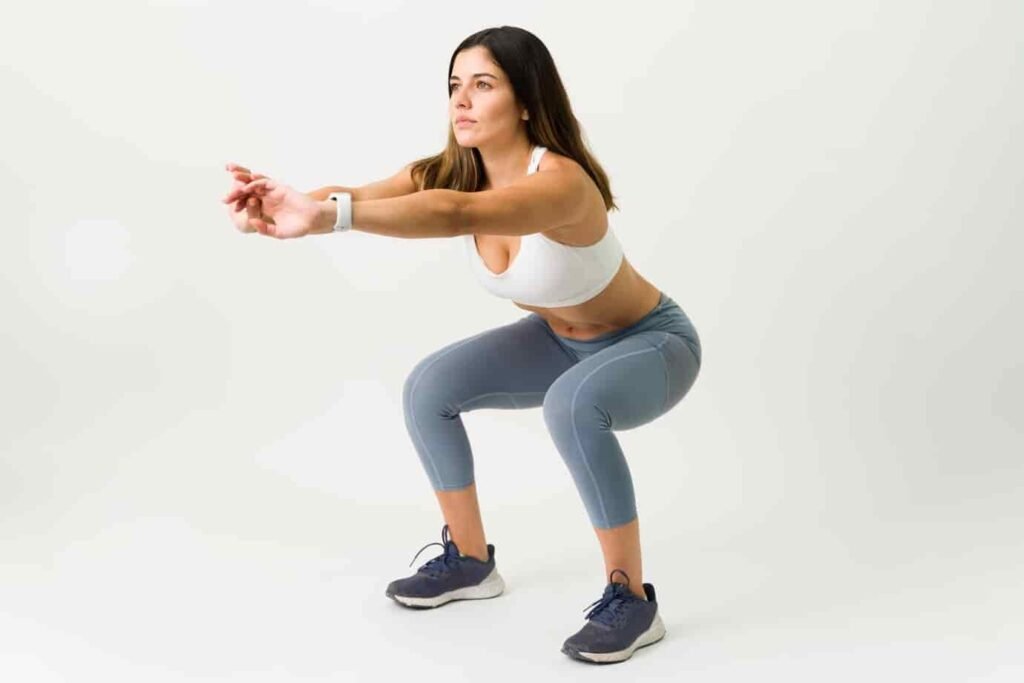
Example: Squat
Starting Position: Stand with feet shoulder-width apart, arms at your sides.
Movement: Slowly bend your hips and knees, lowering your body as if sitting into a chair. Let your arms swing forward for balance. Keep your back straight and return to the starting position. Perform 8-12 repetitions.
Tips:
- Shift weight into your heels.
- Squeeze glutes when standing up to improve stability.
3. Stretching
Flexibility is often overlooked in youth but becomes more critical with age. Muscles naturally shorten over time, limiting movement and increasing the risk of cramps, strains, joint pain, and falls.
Regular stretching increases muscle length, enhances range of motion, and reduces discomfort and injury risk. Aim to stretch daily or at least three to four times per week.
Start with dynamic stretches—repetitive movements like arm circles or marching in place—to warm up muscles. Then, move to static stretching (holding a position for up to 60 seconds) for key muscle groups.
Avoid pushing a stretch into pain, as this causes muscle tightness and counteracts the benefits.
Example: Single Knee Rotation
Starting Position: Lie on your back with legs extended.
Movement: Relax shoulders against the floor. Bend the left knee and place the left foot on the right thigh above the knee. Engage core muscles, grasp the left knee with the right hand, and gently pull it across the body toward the right side. Hold for 10-30 seconds. Return to the start and repeat on the opposite side.
Tips:
- Stretch only to mild tension, never pain.
- Keep both shoulders in contact with the floor.
- For a deeper stretch, turn your head in the opposite direction of your knee.
4. Balance exercises
Enhancing your balance not only helps you feel more stable but also reduces the risk of falls, which becomes increasingly important as we age. No matter your current ability, it’s never too early to start incorporating these exercises into your routine.
Common balance exercises include standing on one foot, walking heel to toe, and practicing with your eyes open or closed. A physical therapist may also guide you through activities that improve joint flexibility, strengthen leg muscles (such as squats and leg lifts), and help you navigate uneven surfaces safely.
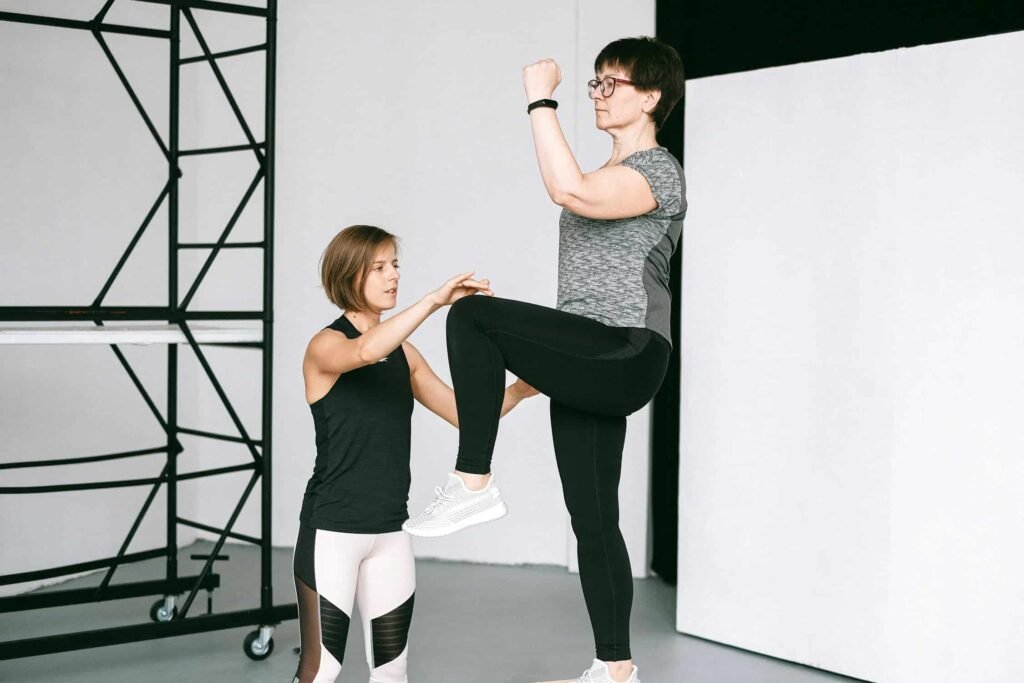
Example: Standing knee lift
Starting position: Stand up straight with your feet together and your hands on your hips.
Movement: Lift your left knee as high as is comfortable or until your thigh is parallel to the floor. Hold, then slowly lower your knee to the starting position.
Tips and techniques:
- Keep your chest lifted and your shoulders down and back.
- Lift your arms out to your sides to help you balance, if needed.
- Tighten your abdominal muscles throughout.
- Tighten the buttock of your standing leg for stability.
“By incorporating these four essential types of exercise into your routine, you’ll enhance mobility, strength, and endurance —allowing you to stay active, healthy, and confident in daily life“