

Summer heat doesn’t just make your house uncomfortable. It drives up energy bills, disrupts sleep, and turns upstairs rooms into saunas by mid-afternoon. If you’re trying to keep your home cool this summer without running central AC around the clock, the fix usually isn’t one big purchase. It’s a combination of small, smart moves that stack up to a real difference.
The U.S. Department of Energy estimates that heating and cooling account for about half of a typical home’s energy costs. Even modest changes to how you manage airflow, sunlight, and heat sources can trim that number down while making your space more livable.
Use Fans Strategically (Not Just to Push Air Around)
Most people stick a fan in a corner and hope for the best. That works, sort of. But fans are far more effective when you think about airflow as a system rather than a single breeze.
The basic principle: create cross-ventilation by opening windows on opposite sides of your home, then position fans to pull cooler outdoor air in on one side and push hot indoor air out the other. This works best in the evening and early morning when outside temperatures drop below what’s inside. During peak afternoon heat, though, close everything up to trap the cooler air you’ve already got.
Ceiling fans should spin counterclockwise in summer, which pushes air straight down and creates a wind-chill effect. That won’t actually lower the room temperature, but it makes the space feel several degrees cooler on your skin. Just remember to turn them off when you leave, because fans cool people, not rooms.
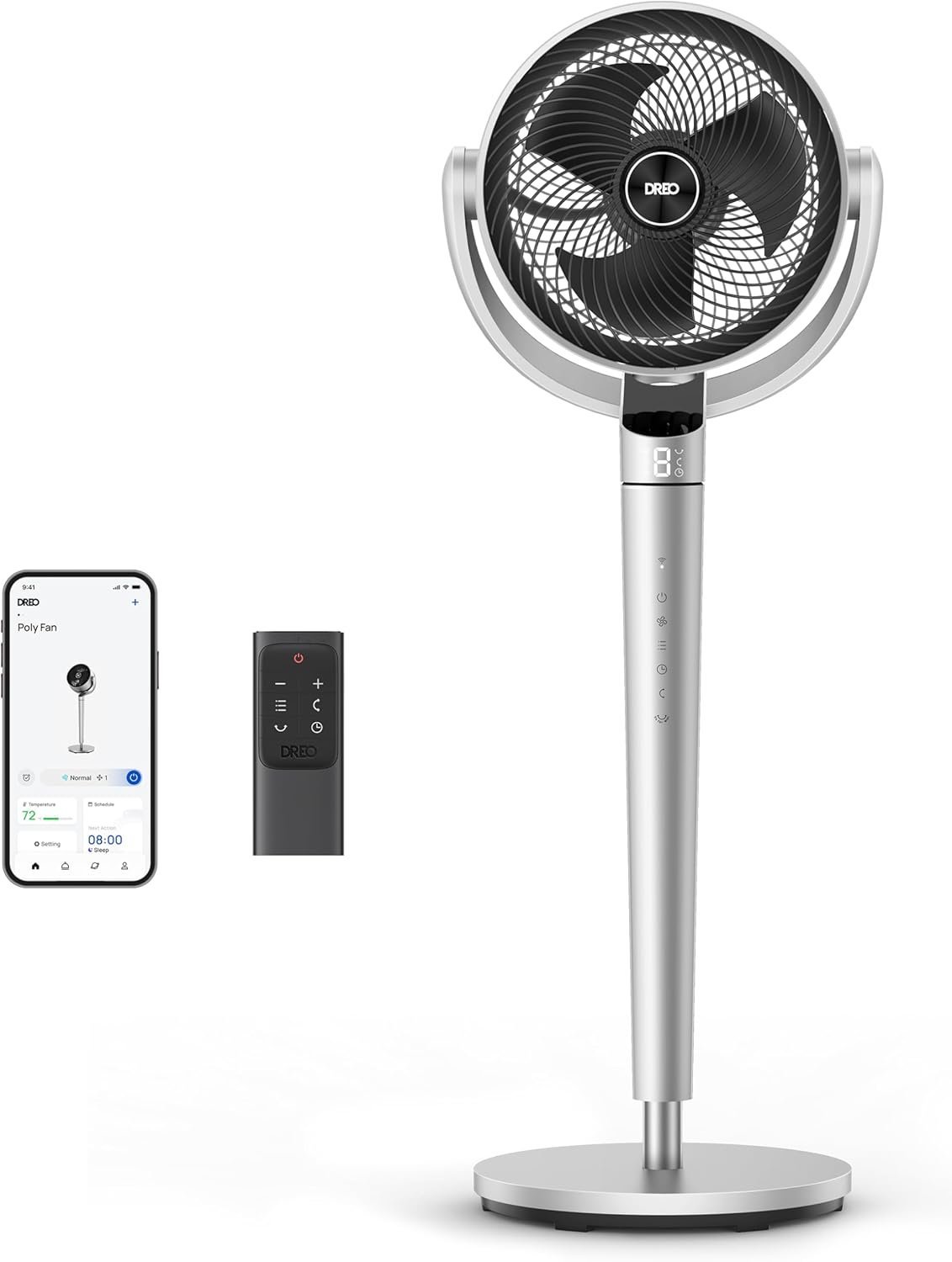
For something more powerful, the Dreo PolyFan 704S is a standout. It’s a pedestal fan with 150-degree horizontal and 120-degree vertical oscillation, meaning it covers a huge area instead of blowing in one fixed direction. It pushes air up to 100 feet at 882 CFM, which is impressive for its size. The app and Alexa control are genuinely useful here since you can schedule it to ramp up before you get home from work. At around $150, it’s not cheap for a fan, but the DC motor runs quieter than most tower fans (as low as 25 dB on the lowest setting), and it uses less electricity than older AC-motor models.
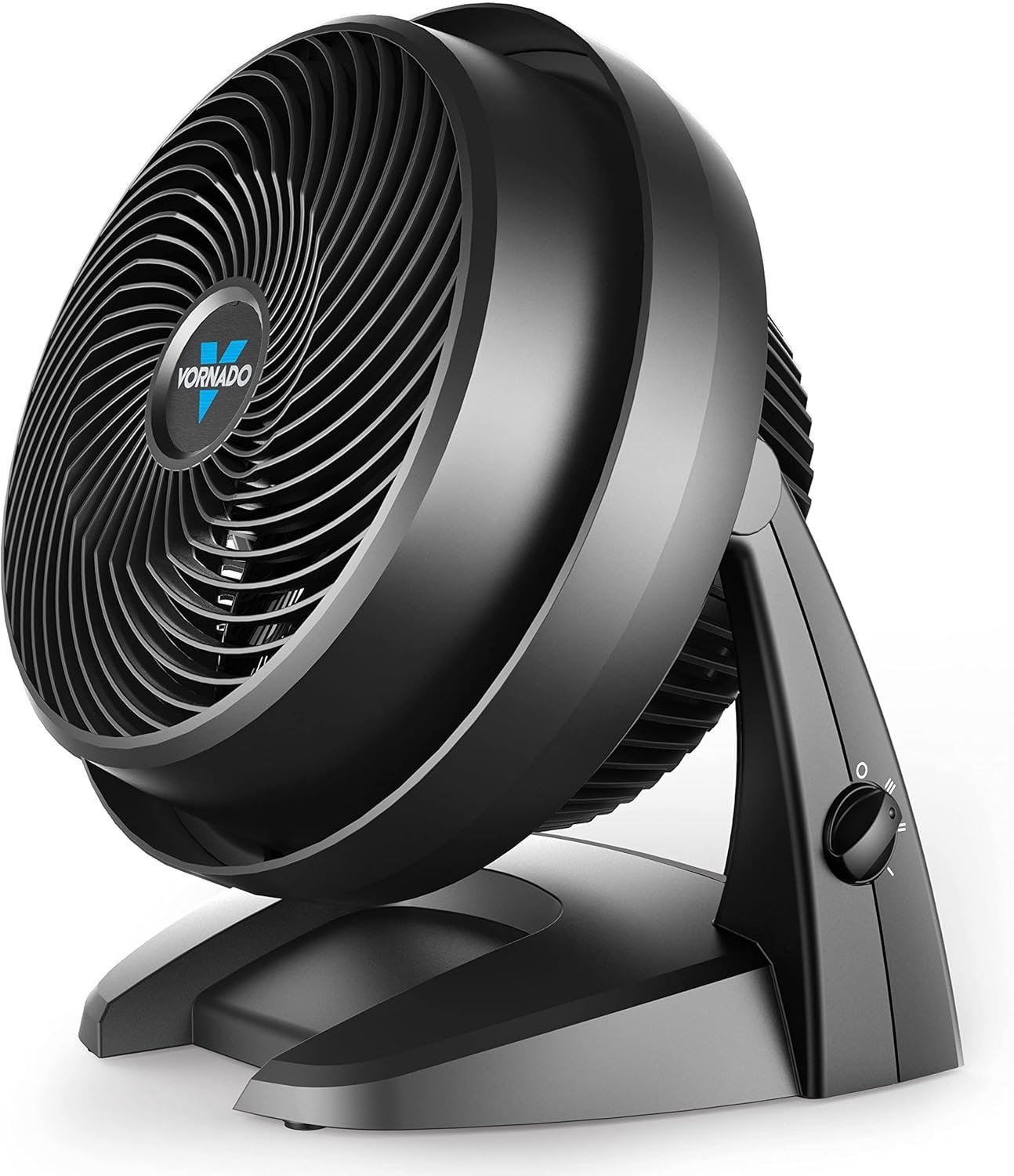
If you want something simpler and cheaper, the Vornado 630 Air Circulator (around $40) uses vortex airflow to move air in a consistent circular pattern throughout the room. It doesn’t oscillate, but the whole-room circulation approach means you don’t need it to. It’s a solid pick for bedrooms or home offices where you just need steady, quiet airflow.
Block the Sun Before It Heats Your Rooms
About 76% of sunlight that hits standard double-pane windows enters as heat, according to the Department of Energy. That’s a massive amount of thermal energy pouring into your home every sunny day. Blocking it at the window is one of the single most impactful things you can do to keep your home cool this summer.
South-facing and west-facing windows are the biggest offenders. West-facing windows are especially brutal because they catch low-angle afternoon sun right when outdoor temperatures peak. If you only treat a few windows, start there.
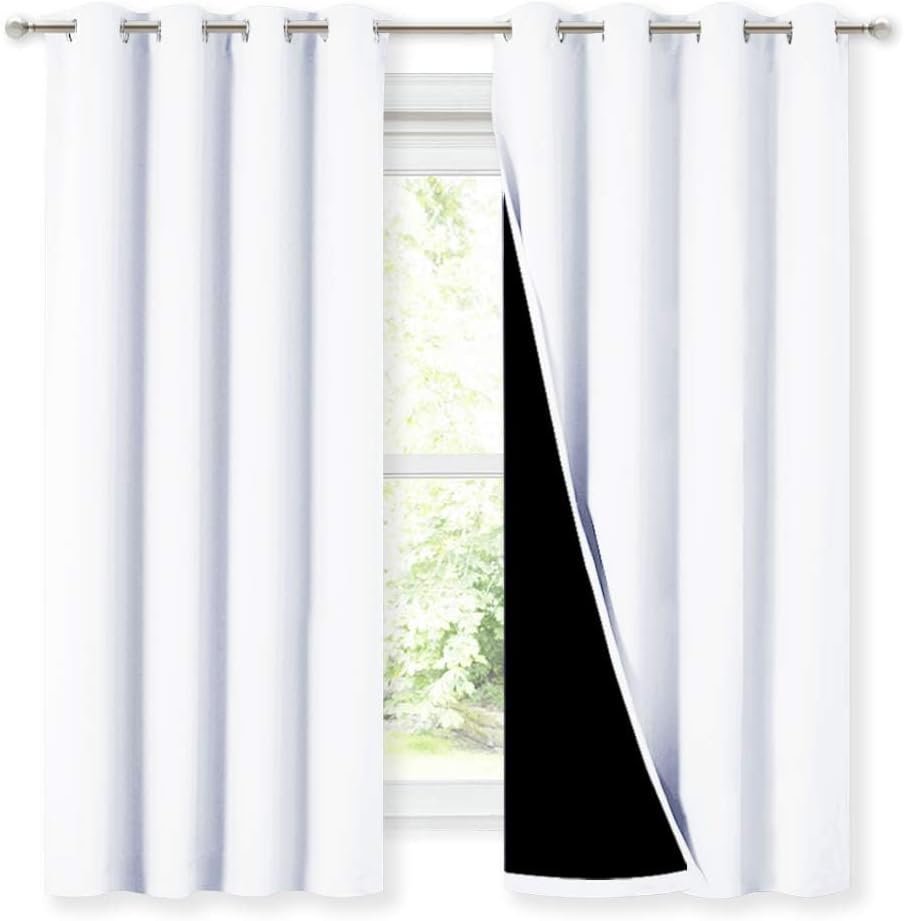
Nicetown 100% Blackout Curtains are a popular and affordable option on Amazon for a reason. They use triple-weave fabric with a black liner layer that blocks virtually all sunlight and UV rays. More importantly for cooling, the thermal insulation layer creates a barrier between window heat and your room. The Department of Energy notes that curtains with white plastic backings can reduce heat gain by up to 33%. Nicetown’s versions come in dozens of colors and sizes, and a pair of 52″ x 84″ panels typically runs under $30. They’re machine washable, too.
Beyond curtains, exterior solutions are even more effective because they stop heat before it reaches the glass. If you own your home, awnings over south and west windows can cut solar heat gain by 65-77%. Even a cheap reflective window film applied to the outside of the glass can make a noticeable difference in rooms that get hammered by direct sun.
Know When a Portable AC Actually Makes Sense
Fans and window treatments go a long way, but there’s a point where they’re not enough. If your home regularly hits 85+ degrees indoors despite your best efforts, or if you’re in a humid climate where fans just push wet air around, a portable AC unit for one or two key rooms can be the right call.
The catch with portable AC is that most units are louder and less efficient than window units or mini-splits. They also need a window exhaust hose, which isn’t always obvious from the marketing photos. Still, for renters or anyone who can’t install permanent cooling, they’re a practical solution.
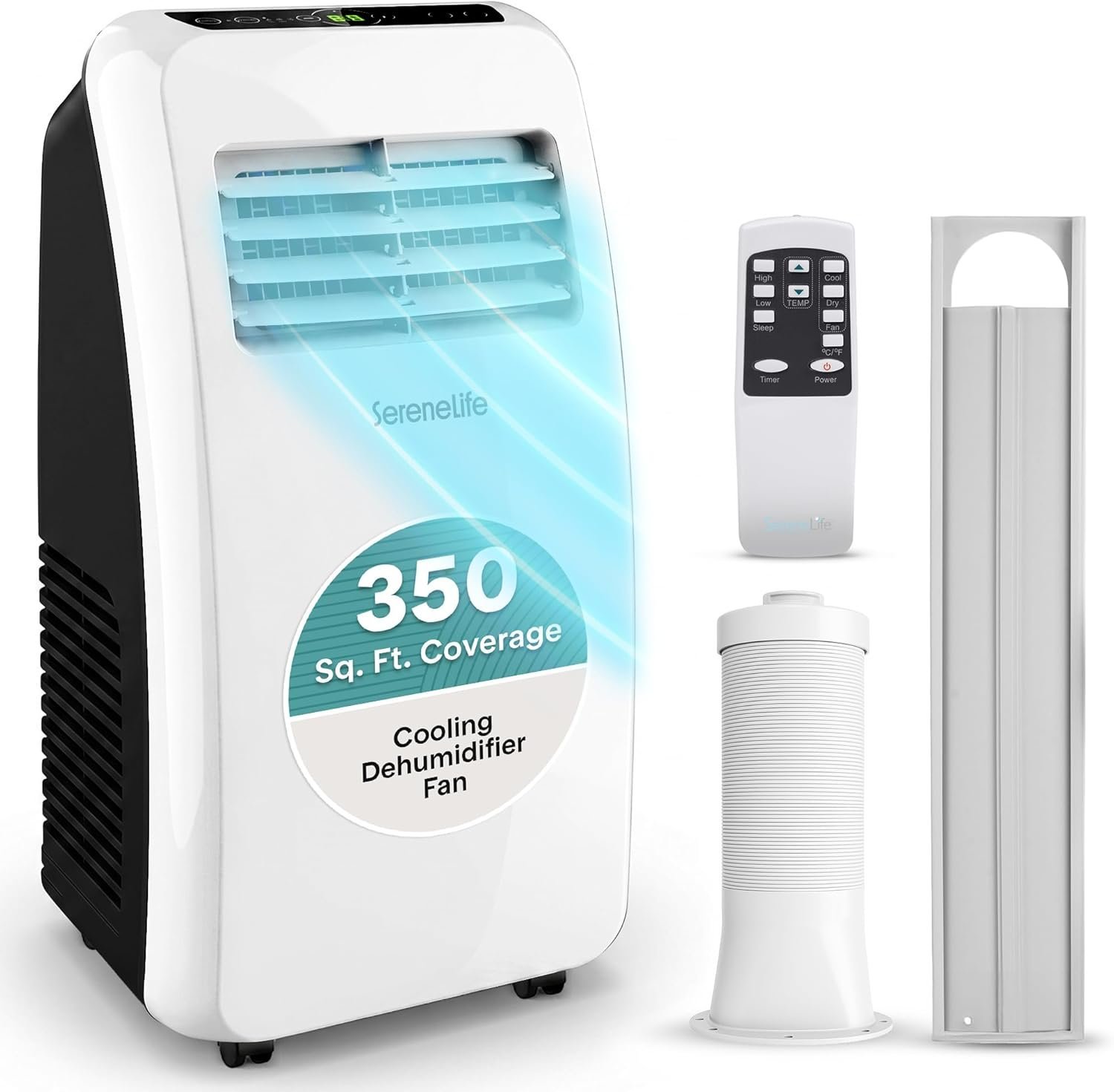
The SereneLife 8,000 BTU Portable AC handles rooms up to about 300-350 square feet, which covers most bedrooms and home offices. It doubles as a dehumidifier (pulling about 1.1 liters per hour), which is a real bonus in humid climates where removing moisture from the air makes a room feel cooler even at a higher temperature. It has Wi-Fi control, so you can start cooling a room from your phone before you walk in. At around $300, it’s one of the more affordable portable AC options, though it’s honest to say that some users find it loud enough to notice at night. If you’re a light sleeper, you might want to run it on a timer that shuts off after you fall asleep.
For sizing, the general rule is 20 BTU per square foot. A 150-square-foot bedroom needs about 3,000 BTU, so 8,000 BTU gives plenty of overhead. Don’t oversize, though. An AC that’s too powerful for the space will cool the air fast but won’t run long enough to dehumidify properly, leaving you cold and clammy.
Build Better Habits Around Heat
Some of the most effective ways to keep your home cool this summer don’t cost anything. They’re just about timing and awareness.
Your oven is basically a space heater that also cooks food. Running it at 400 degrees during a 95-degree afternoon adds meaningful heat to your home. Grilling outside, using a microwave, or eating cold meals during heat waves keeps that extra thermal load out of your living space entirely. The same goes for your dryer. If possible, run it in the evening or hang clothes to dry.
Incandescent light bulbs convert about 90% of their energy into heat rather than light. If you still have any, switching to LEDs eliminates that heat source while cutting your lighting energy use by 75%. It’s one of those changes where the cooling benefit is a bonus on top of the energy savings.
Hot water also contributes more than people realize. Showers, dishwashers, and washing machines all add heat and humidity. Running them during cooler evening hours keeps your daytime indoor temperatures lower.
Finally, check your home’s sealing. Gaps around windows, doors, and where pipes enter walls let hot outside air leak in all day. Weatherstripping and caulk are cheap, and sealing these gaps helps your cooling efforts actually stick instead of fighting a constant influx of outdoor heat.
What Actually Works to Keep Your Home Cool This Summer
There’s no single trick that solves summer heat. The homes that stay comfortable are the ones where multiple strategies work together, and the good news is that most of them are cheap or free.
Start with the free stuff: cross-ventilate in the evening, close up during the day, run ceiling fans counterclockwise, and stop using your oven during peak heat. Then layer on window treatments, because blocking solar heat gain at the window is probably the highest-return investment you can make for under $30. If fans and curtains aren’t cutting it, a portable AC for your bedroom or office lets you cool only the rooms you’re actually using instead of blasting the whole house.
The key to keeping your home cool this summer is consistency. It’s easier to maintain a cool house than to cool down a hot one, so start these habits before the first heat wave hits rather than scrambling when your indoor thermometer reads 88.
For more home and garden recommendations, check out Gabi’s List home and garden picks.
Disclosure: This post contains affiliate links. If you make a purchase through these links, Gabi’s List may earn a small commission at no additional cost to you. This helps support the site and allows us to continue providing honest product recommendations.